
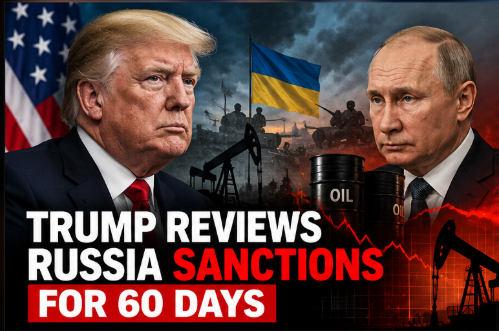
The United States is delaying a final decision on major new sanctions targeting Russia as President Donald Trump weighs the economic consequences of tightening pressure on Moscow at a time of elevated global energy prices.
U.S. Secretary of State Marco Rubio said on October 18 that Trump intends to use a 60-day review period to examine the potential impact of sanctions and tariffs that were waived just before they were due to take effect. Reuters
The measures were authorized under the Graham Act, legislation signed last month that was designed to increase economic pressure on Russia over its continuing war in Ukraine.
The law included penalties on Russian goods as well as possible tariffs on countries purchasing Russian oil and gas.
Trump signed an executive order on Friday temporarily waiving those provisions.
According to Rubio, the administration now wants more time to understand how imposing the measures could affect both the U.S. economy and global markets. Reuters
Energy Prices Are Complicating the Decision
The sanctions debate is happening during an unusually difficult period for global energy markets.
Conflicts in the Middle East have disrupted oil supplies and contributed to higher fuel prices, creating political pressure on governments trying to keep transportation and consumer costs under control.
Russia remains one of the world’s largest energy exporters.
Sanctions targeting its oil and gas sector could therefore have consequences beyond Russia itself.
Countries such as India continue to purchase significant quantities of Russian energy, meaning secondary tariffs could also affect major U.S. trading partners.
Rubio specifically pointed to this problem when explaining why the administration wanted additional time before making a final decision. Reuters
Ukraine Strongly Opposes the Waiver
Ukrainian President Volodymyr Zelenskiy has sharply criticized Washington’s decision.
Kyiv argues that reducing economic pressure on Moscow could give Russia additional resources while weakening one of the West’s main tools for influencing the war.
The dispute comes during a broader deterioration in relations between Washington and Kyiv.
Recent tensions have involved energy policy, intelligence cooperation and U.S. support for Ukrainian military operations. Reuters
For Ukraine, the issue is particularly sensitive as Russia continues targeting energy infrastructure and cities with missiles and drones.
A Russian Diesel Deal Adds Another Complication
Washington has also reached an agreement allowing additional Russian diesel supplies to reach markets.
Trump said Russia would initially provide more than 300,000 metric tons of diesel, with additional shipments expected later. Reuters
The administration argues that increasing supply could help ease fuel prices.
Critics, however, say energy purchases may provide Moscow with additional revenue while Russia continues its war in Ukraine.
The next 60 days could therefore become a crucial period for U.S.–Russia and U.S.–Ukraine relations.
Trump must balance several competing priorities: maintaining pressure on Russia, protecting relationships with major energy-importing countries and preventing higher fuel prices from creating additional economic pressure at home.

Leave a comment
Your email address will not be published. Required fields are marked *